Updated Sep 14, 2026
Task Scam: Paid to Unlock Earnings or Complete a Job?
If an online job demands deposits to unlock tasks or earnings, stop paying. Preserve the chats and transfers, contact your payment provider, and secure accounts.
Read article

Knowledge Library
Explore account recovery, cyber safety, platform security, and incident response guidance from Hacked.com.

Updated Sep 14, 2026
If an online job demands deposits to unlock tasks or earnings, stop paying. Preserve the chats and transfers, contact your payment provider, and secure accounts.
Read article

Updated Sep 14, 2026
Call your bank through its official app or the number on your card. Report unfamiliar transactions, secure online access, and keep each dispute reference.
Read article
Updated Sep 14, 2026
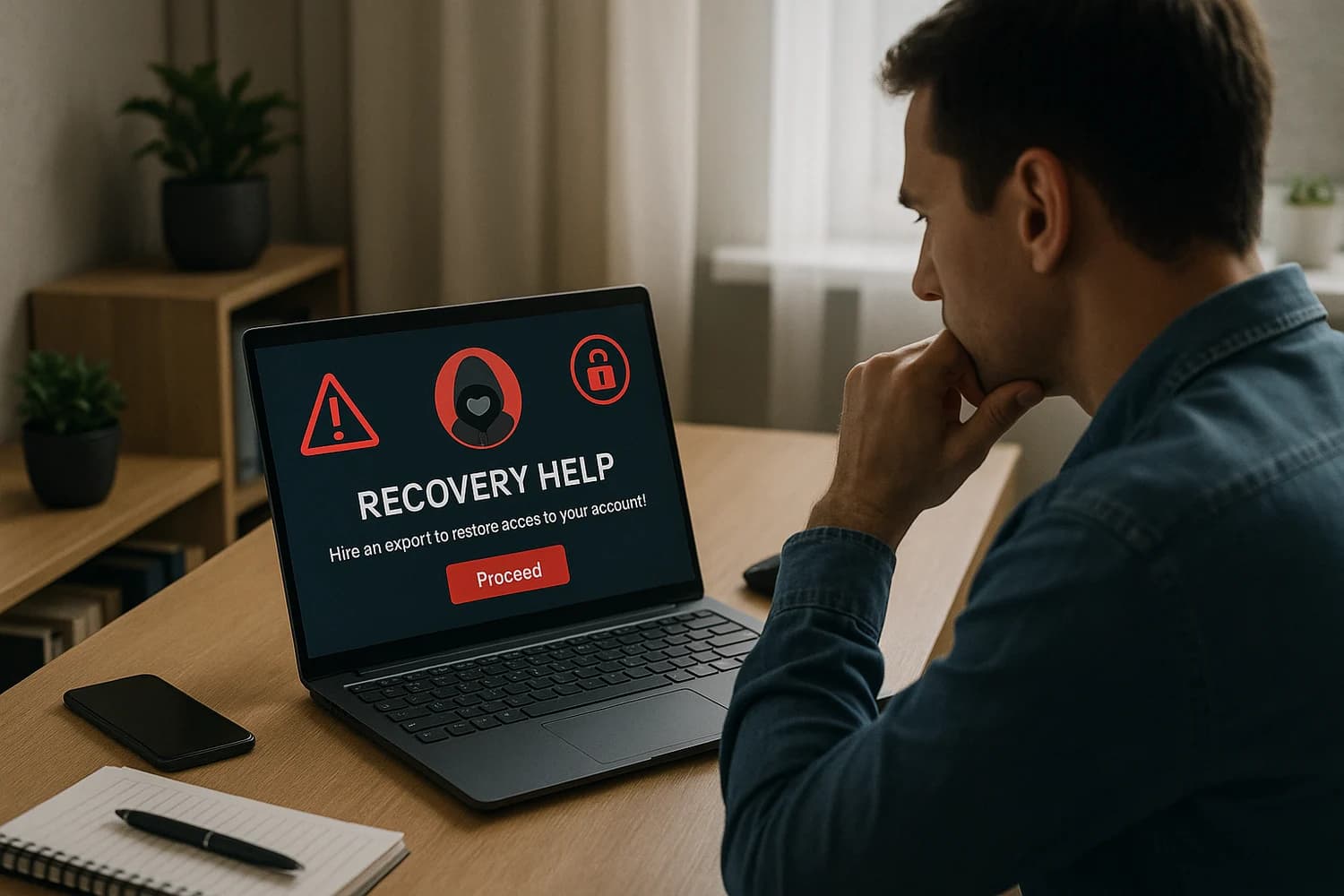
A stranger promising to hack an account back can steal more money or data. Use the provider's recovery process and verify any paid help independently.
Read article

Updated Sep 14, 2026
Check the sender and requested action without using the email's links. If you shared a password, code, or payment details, secure the affected service.
Read article

Updated Sep 14, 2026
Report unauthorized LinkedIn access through its official help process. Secure email, remove unknown sessions, and review scam messages or profile changes.
Read article

Updated Sep 14, 2026
A caller asking you to move money to a safe account may be stealing it. End the call, contact your bank independently, and report transfers already sent.
Read article

Updated Sep 14, 2026
If Bitcoin is stolen, separate exchange-account access from wallet-key exposure. Stop further loss, save transaction hashes, and avoid recovery-fee promises.
Read article

Updated Sep 14, 2026
If a scammer controlled your computer, disconnect the session and use another trusted device to secure important accounts. Contact your bank if money was exposed.
Read article

Updated Sep 14, 2026
If a business account is hacked, secure administrator and email access, stop payment diversion, preserve logs, and coordinate recovery with the account owners.
Read article

Updated Sep 14, 2026
If a romance scam turns into threats, stop sending money or material. Preserve messages, secure exposed accounts, and contact the relevant reporting channels.
Read article

Updated Sep 14, 2026
If an invoice or changed bank details diverted your payment, call the sending bank, verify the supplier separately, and preserve the original email and receipt.
Read article

Updated Sep 14, 2026
An investment site demanding more money to release a withdrawal may be a scam. Stop deposits, verify the operator, and preserve your real payment records.
Read article

Updated Sep 14, 2026
Someone says they found money you lost to fraud. Verify their identity and authority, refuse release fees, and save the new claim without exposing account access.
Read article

Updated Sep 14, 2026
Contact your bank immediately after a scam payment. Record who made the transfer, the payment details, the deception, and each dispute or recall reference.
Read article

Updated Sep 14, 2026
A familiar voice does not prove a kidnapping. Verify your relative through a separate call, pause payment, and save the ransom messages.
Read article

Updated Sep 14, 2026
Revoke a leaked API key promptly, check its permissions and usage logs, and update affected integrations. A replacement key does not disable the exposed one.
Read article

Updated Sep 14, 2026
If you have been hacked, stop active financial loss, secure your email and phone, remove unknown sessions, and recover accounts from a trusted device.
Read article

Updated Sep 14, 2026
Isolate affected systems, preserve logs, and involve your incident-response team. Check backups and stolen-data exposure before restoring business operations.
Read article

Updated Sep 14, 2026
A California attorney general complaint can document a Facebook dispute. It does not replace Meta account recovery or guarantee restored access.
Read article

Updated Sep 14, 2026
When hacking tools leak, check exposed services and exploited vulnerabilities first. Patch affected systems and investigate signs of unauthorized access.
Read article

Updated Sep 14, 2026
Ransomware recovery depends on controlled access and usable backups. Separate containment, evidence preservation, and restoration before reconnecting systems.
Read article

Updated Sep 14, 2026
Security alerts can become phishing bait. Verify urgent messages through a known channel before signing in, approving access, or changing a payment.
Read article

Updated Sep 14, 2026
Conflict-related messages can impersonate charities or trusted contacts. Verify the organization and payment destination before donating or opening files.
Read article

Updated Sep 14, 2026
Recupera Facebook mediante sus opciones oficiales. Protege el correo y el teléfono, revisa cambios no autorizados y elimina las sesiones desconocidas.
Read article

Updated Sep 14, 2026
Comprueba accesos desconocidos, cambios de correo y pagos que no reconoces. Una alerta aislada no confirma un hackeo: verifica desde la aplicación oficial.
Read article

Updated Sep 14, 2026
Si te han hackeado, detén los pagos fraudulentos, protege tu correo y recupera las cuentas desde un dispositivo seguro. Guarda pruebas de los cambios.
Read article

Updated Sep 14, 2026
Fake Facebook support numbers can lead to stolen codes, remote access, or payments. Stop the call, secure exposed accounts, and use Meta's official help.
Read article

Updated Sep 14, 2026
If your hacked Facebook account is messaging friends, warn them through another channel, stop unauthorized activity, and recover access through Meta.
Read article

Updated Sep 14, 2026
A Marketplace payment screenshot is not proof of payment. Check the real account, stop extra transfers, and save the listing, chat, and transaction details.
Read article

Updated Sep 14, 2026
When Facebook recovery stalls, record the exact screen and check which email, phone, or familiar device you still control before choosing another route.
Read article

Updated Sep 14, 2026
If someone threatens to share a fake nude image, preserve the threat, avoid payment, and report the account and any published image through official channels.
Read article

Updated Sep 14, 2026
A fake profile can scam people without accessing your real account. Save both profile URLs, report impersonation, and warn contacts through a trusted channel.
Read article

Updated Sep 14, 2026
Spear phishing uses specific names or work details to make a request credible. Verify the action independently and report suspicious messages before replying.
Read article

Updated Sep 14, 2026
A platform breach can expose information used in later scams. Replace reused passwords, check account activity, and verify messages claiming to offer help.
Read article

Updated Sep 14, 2026
After a Gmail takeover, inspect forwarding, filters, delegates, and connected apps. Restoring Google sign-in alone may leave unwanted mailbox access.
Read article

Updated Sep 14, 2026
A leaked-document link can lead to phishing or malware. Avoid unverified downloads and secure exposed accounts if you entered credentials or ran a file.
Read article

Updated Sep 14, 2026
Ransomware extortion may involve stolen data as well as encrypted files. Isolate affected access, preserve evidence, and verify recovery options before acting.
Read article

Updated Sep 14, 2026
Public-service ransomware can interrupt essential operations. Preserve incident logs, isolate affected access, and validate backups before restoring services.
Read article

Updated Sep 14, 2026
After a medical data breach, review claims and bills for services you did not receive. Secure patient portals and verify calls asking for personal details.
Read article

Updated Sep 14, 2026
Check whether the problem affects Google sign-in, Gmail delivery, or your YouTube channel. Each needs a different recovery or troubleshooting path.
Read article

Updated Sep 14, 2026
A threatening email with an old password or home photo does not prove spyware access. Save the message, check for real account changes, and avoid payment.
Read article

Updated Sep 14, 2026
A podcast invitation should not require control of your Facebook business. Review unexpected role requests, stop ad misuse, and preserve business asset IDs.
Read article

Updated Sep 14, 2026
Limit exposed contact details and strengthen the accounts that reset other accounts. Separate suspicious messages from confirmed unauthorized access.
Read article

Updated Sep 14, 2026
A scam text may ask for a payment, login, or code. Open the service directly; if you shared information, secure the affected account and save the message.
Read article

Updated Sep 14, 2026
Check account changes, unknown apps, and unexpected loss of phone service. Battery drain alone does not prove hacking; match each symptom to a safe next step.
Read article

Updated Sep 14, 2026
Verify unfamiliar logins, recovery changes, and unauthorized charges in the real app. Distinguish an account takeover from malware or a fake security alert.
Read article

Updated Sep 14, 2026
Check a store's domain, seller identity, return terms, and payment method. A padlock or polished design does not prove that a website is legitimate.
Read article

Updated Sep 14, 2026
Online blackmail demands money, access, or more material under threat. Save the demands, secure exposed accounts, and use official reporting channels.
Read article

Updated Sep 14, 2026
Choose the reporting body for your country and the harm involved. A consumer complaint, police report, and payment dispute serve different purposes.
Read article

Updated Sep 14, 2026
If a hacker changed your recovery email or phone, identify the access you still control. Use the provider's ownership checks and secure other linked accounts.
Read article