
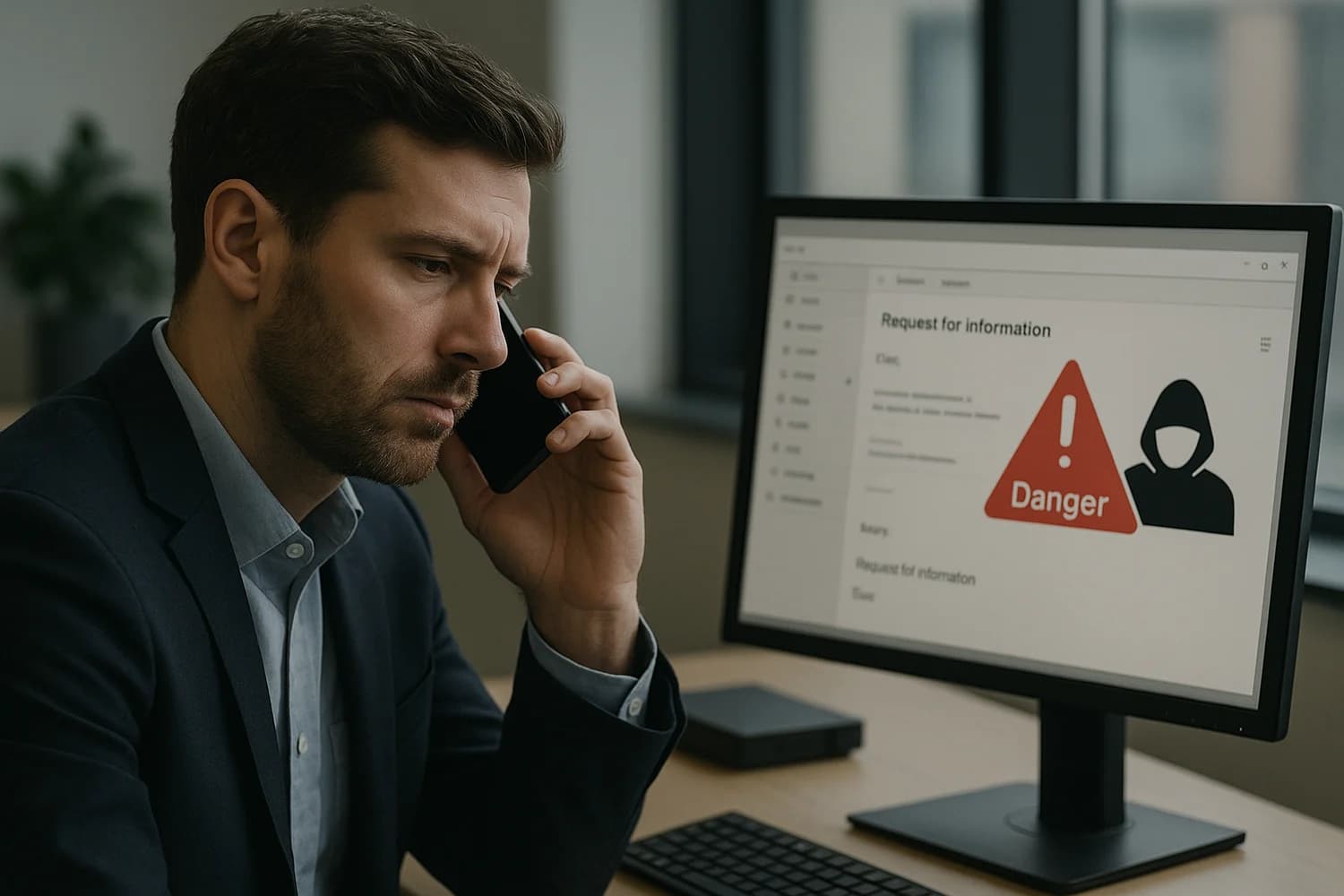
Social engineering manipulates people into granting access, sharing information, or sending money. Independent verification interrupts the attacker's request.
It works by exploiting trust and time pressure, not by exploiting a software bug.
Why it matters for account recovery
Many account takeovers and fraud events start as social engineering. Attackers want you to pick the verification method for them, usually a method they can intercept or control.
If you treat verification as a procedure instead of a vibe check, most social engineering attempts collapse quickly.
Common failure modes and misconceptions
- Letting urgency choose the channel: Attackers push you into using links, codes, or phone calls that they control.
- Assuming familiarity equals legitimacy: A compromised account can send "normal" messages. Context can be stolen cheaply.
- Treating email as proof of identity: Email is transport, not identity. Verification needs an independent channel.
Safe best practices
- Normalize a verification rule for high leverage requests: money, access, recovery, and admin changes require an out-of-band check.
- Learn the main delivery variants: phishing, smishing, and vishing.
- Protect the control plane so resets and alerts are not attacker tools (see account takeover).
What to record if it happens
Record the identity claimed, pressure used, action requested, and independent verification attempt. Keep original messages and note what you actually did, rather than treating every claim from the sender as an established fact.
Related terms
- Phishing
- Smishing
- Vishing
- Business email compromise (BEC)
Related guides
Social engineering is predictable. The win condition is a verification process that holds under pressure, not perfect judgment in the moment.