
What is reported: Reuters says the intrusion was discovered during upgrade work within roughly the past month. One person familiar with the matter said attackers exploited a software vulnerability to reach the cloud control plane.
What remains unknown: The Air Force did not confirm operational details to Reuters. The attacker, the vulnerability, affected applications and whether information was stolen have not been publicly established. There is no evidence in the reporting that AI was used.
Air Force Cloud One Breach: Hackers Reportedly Reached Cloud Controls
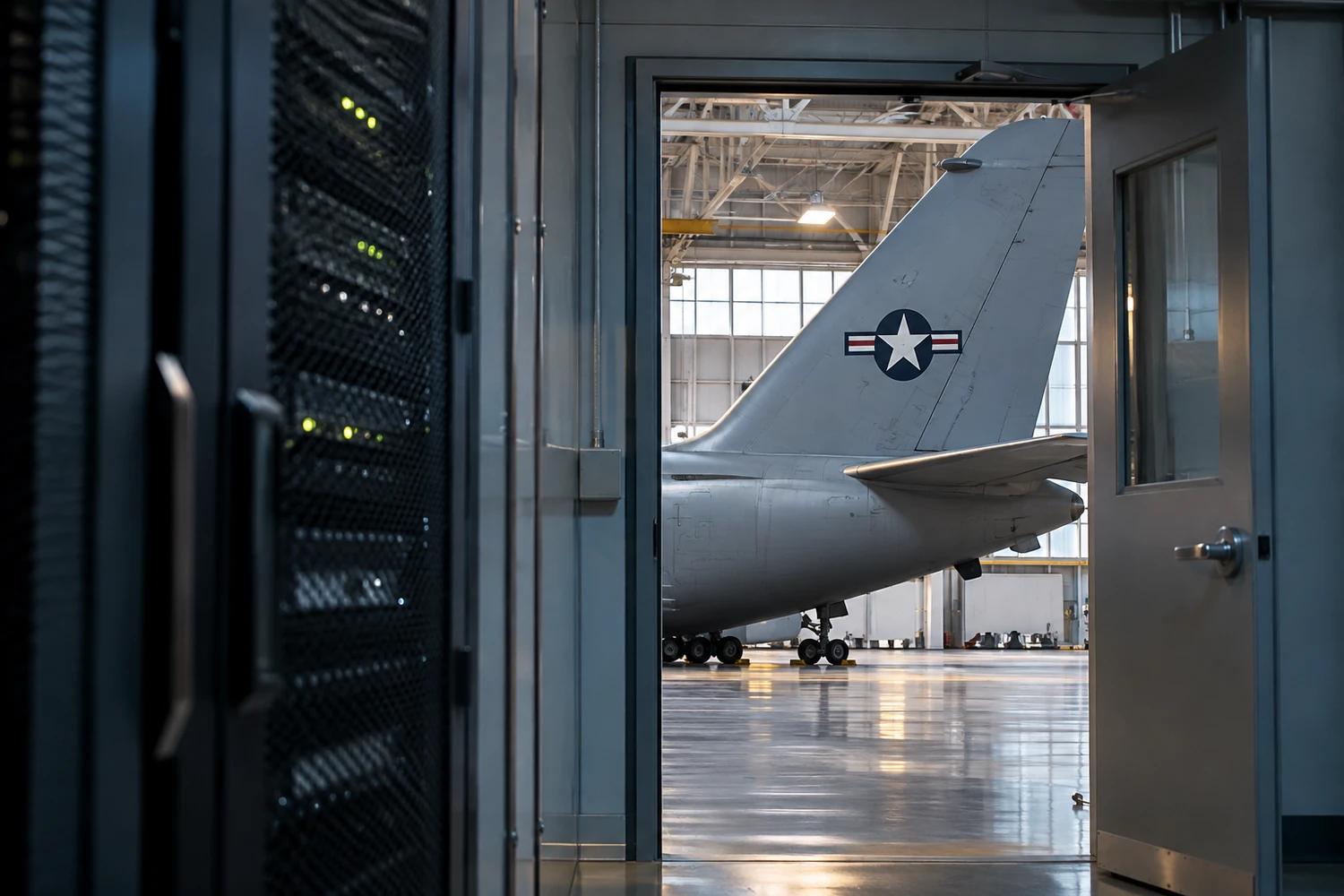
One person familiar with the matter told Reuters that hackers reached the management layer of Cloud One, a U.S. Air Force cloud platform. Some application updates were reportedly blocked, while the extent of the intrusion remains unknown.
Jump to a section
When intruders reach a cloud platform, the team trying to stop them may face another problem: the systems used to make repairs can themselves become harder to trust.
That tension runs through a Reuters investigation published November 27. Three people familiar with the matter told the news agency that hackers breached Cloud One, a platform supporting Air Force applications across multiple commercial cloud providers.
NBC News separately reported that an unnamed U.S. official confirmed an intrusion into the Air Force’s cloud platform but gave no details about timing or impact. NBC did not identify Cloud One in its report or independently establish the control-plane and update details.
Reuters said the discovery led to disruption: planned migrations were paused, updates to applications already on the platform were blocked, and some users lost administrator privileges. The agency did not establish the specific reason updates were blocked or identify which applications were affected. Its reporting is also available in this syndicated copy.
Those details matter because restricting access can be necessary during an investigation, while delays to security updates can leave other risks unresolved. That is an operational tradeoff, not proof that delayed updates caused another compromise. We checked the available reporting and documents on November 27, 2026.
What the reporting establishes, and what it does not
Two people told Reuters the intrusion was discovered during upgrade work within roughly the previous month. One person said the attackers exploited an unidentified software vulnerability, a weakness that can be used to bypass intended protections, to reach the platform’s control plane, the management layer used to configure and oversee cloud resources.
One source told Reuters that U.S. Cyber Command had been called in to assess the damage. The Air Force told the news agency it does not comment on the security posture or operational status of specific systems. That response is not a public confirmation of the reported intrusion or its scope.
Reuters could not establish who was responsible, which flaw was used, how much access the intruders obtained or whether data was stolen. It did not report that attackers accessed classified information, disabled aircraft, manipulated weapons systems or reached every application on the platform. Access to a control plane can be serious, but the actual permissions obtained and the separation between systems determine what an intruder can do.
Why the control plane matters
A cloud application is the service people use. Its control plane is closer to the place administrators manage the surrounding environment: depending on the platform and privileges, they may configure resources, permissions, network rules or logging.
Think of a building with many offices and a management room for keys, access rules and maintenance. Reaching the management room is not the same as proving someone entered every office. But investigators must work out which keys and controls were available, what changed and which records can still be trusted. This is an analogy, not a description of the attacker’s proven actions.
The Air Force’s public software catalog describes Cloud One as a shared cloud service across four providers and lists 171 hosted mission systems, with others in development or migration. Those are the catalog’s platform figures, not the number of systems affected by this incident. Reuters named applications used for personnel, logistics, air-defense data and munitions tracking as examples of Cloud One’s role, but did not establish that those particular applications were accessed.
The same distinction applies to the commercial providers Reuters names. Participation in a multi-cloud platform does not establish that Microsoft, Amazon, Google or Oracle had their own infrastructure breached. Neither does a reported intrusion into a platform prove a compromise of all its security environments.
The older warning in the Pentagon’s own records
The risks of relying on shared commercial cloud services were already on the Pentagon watchdog’s agenda. In a 2023 audit, the Department of Defense inspector general reviewed five systems using commercial cloud services, including Cloud One. Auditors found that officials authorizing those systems had not reviewed all required documentation about risks identified through cloud authorization and ongoing monitoring processes.
The inspector general recommended that the Air Force require a fresh review of the authorizations for Cloud One and another system. In its response, the Air Force partially agreed to review and update guidance, but the watchdog said the response did not specifically address whether those systems’ authorizations would be re-evaluated.
A later inspector general report covering April through September 2025 said the Air Force had not provided documentation demonstrating the requested re-evaluations for the systems reviewed. That is a dated documentation finding across an audit covering multiple services, not proof that the review never happened or that the recommendation remains open today.
Most importantly, there is no public evidence connecting the audit finding to the reported 2026 intrusion. The audit examined how risks were reviewed, not the unidentified vulnerability Reuters describes. Its relevance is a governance question: when a system inherits security services from a provider, who checks the risks that remain?
When the response slows down the fix
Reuters’ report that application updates were blocked raises a question for any organization with shared cloud infrastructure: how do you make an urgent change when the ordinary path for making changes is under investigation?
Restricting administrator access can reduce the chance that an attacker or compromised account makes further changes. But if a team cannot use its normal update pipeline, it may need a separate, verified way to assess urgent vulnerabilities and approve changes. The right choice depends on the evidence, the system and the risk of disrupting an essential service.
Reuters did not say whether the update block was a deliberate containment measure, how long it lasted or whether any affected application remained exposed to a particular flaw. We do not know whether a safe alternative update path existed. The takeaway is to plan for that possibility before an incident, not to assume that emergency patching is always safe.
Amazon’s Cairn investigation, which we covered earlier, illustrated a different delay: a software fix existed in source code while an ordinary patched package was not yet listed. That was a separate incident involving different systems and actors. Together, the two reports show why finding a fix and delivering it safely are distinct steps.
Is this connected to AI or the recent outages?
There is no publicly established connection between this reported intrusion and an AI tool, the NSA Net maintenance disruption, or the outages discussed in our coverage of the FBI’s ARTEX warning. Timing alone cannot establish a shared attacker, tool or cause.
The broader concern is real: the FBI has warned about attackers using AI-assisted tools in other cases. That is context for defenders, not evidence about Cloud One. Likewise, an outage during maintenance does not by itself prove a cyberattack.
What organizations can learn from the report
- Map the management layer. Identify which accounts, service identities and suppliers can change cloud settings, approve deployments, access logs or restore critical systems. Record which business services depend on them.
- Limit and review privileged access. Give administrators only the permissions their role requires, protect sign-ins with strong authentication, and review access after changes in staff or supplier relationships. See our workspace administrator incident guide.
- Plan a protected emergency change path. Define who can approve urgent security changes if the normal deployment process is unavailable, how a clean environment and backups would be verified, and when a service should remain isolated. Protect and test emergency-only administrator accounts. Test the plan with the teams responsible for operations.
- Preserve independent evidence. Agree how security logs, configurations and recovery records will be protected and accessed if administrative accounts are suspected. Do not rely on the affected environment as the only place to find critical contacts or response instructions.
- Ask what the provider’s assurance covers. Review the scope and date of independent assessments, unresolved issues, incident notification terms and shared responsibilities. A certification can be useful evidence; it does not guarantee that every configuration or application is safe. Our supplier oversight guide offers questions for leadership.
CISA’s cloud guidance recommends limiting administrative privileges, separating duties, protecting emergency-only administrator accounts, and considering how an administrator might disable access to logs. These are general planning recommendations, not findings about Cloud One’s controls.
If there are independent signs that your organization’s account or infrastructure has been compromised, activate your incident plan, contact the responsible security team or provider through a trusted channel, and preserve relevant evidence without delaying urgent containment. Our business incident response guide explains the first decisions.
The unanswered question is not simply whether a cloud service can be attacked. It is whether the organization can still see, decide and recover safely when the tools that normally control that service are in question.