
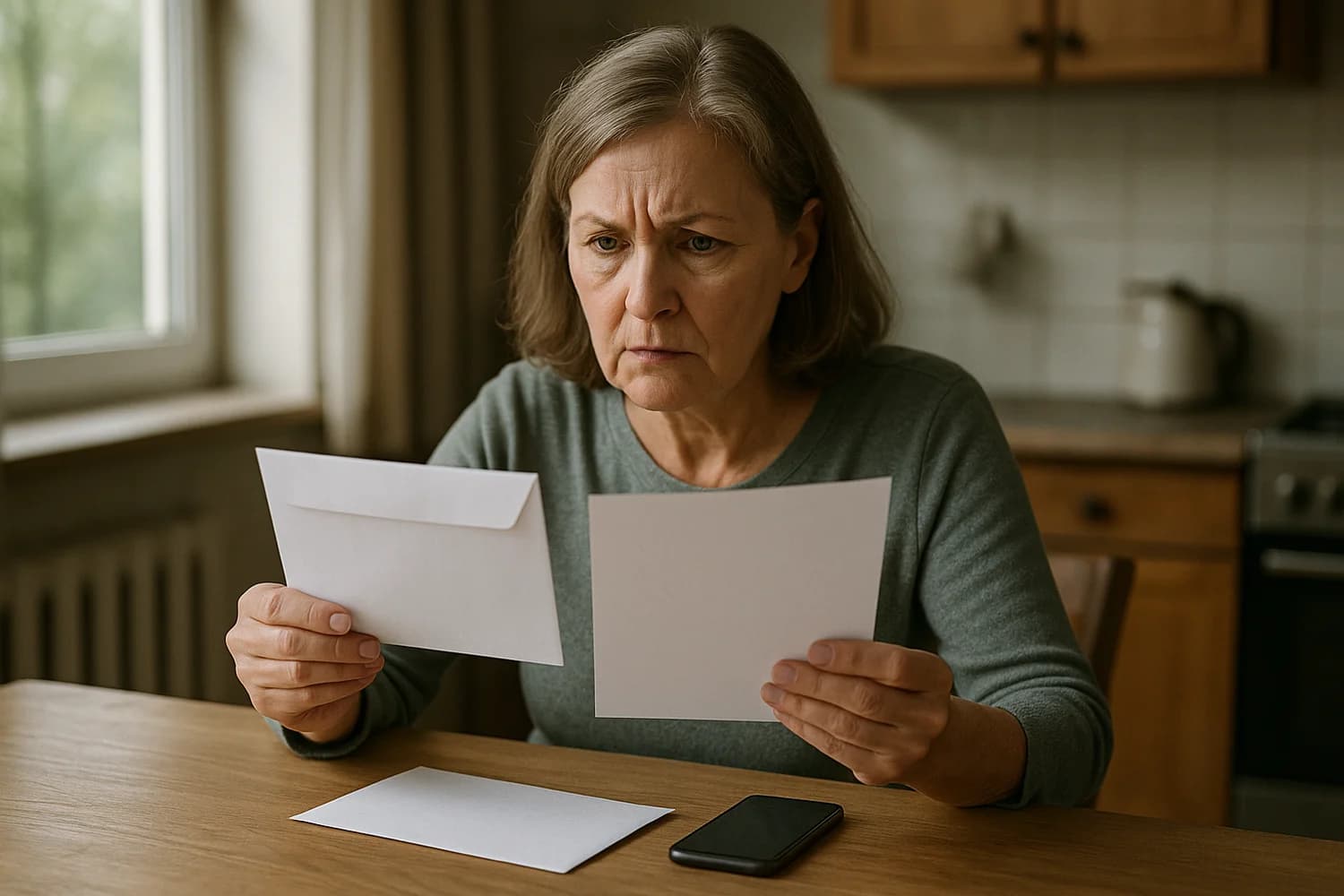
A Social Security scam is designed to replace verification with panic. The message says your Social Security number will be suspended, your bank account will be seized, or criminal charges are already moving forward unless you respond immediately. The point is not legal accuracy. The point is to get your personal data or your money before you pause long enough to verify the source.
The SSA OIG warned in November 2025 about fake messages claiming 'Social Security Account Issues Detected' and threatening suspension of a Social Security number within 24 hours. On the agency's official scam page, SSA says it will never suspend your Social Security number, threaten arrest to force immediate payment, ask for gift cards or cryptocurrency, or offer to move your money to a protected account. Those are not edge-case warnings. They are the core pattern.
Key idea: a message can use real logos, real employee names, and even spoofed caller ID and still be a scam. Caller ID and letterhead are not proof.
First 10 minutes
Pick the lane that matches what already happened.
| What happened | Do this first | Why |
|---|---|---|
| You gave nothing and did not click anything | Stop responding and verify using ssa.gov/scam | You may have avoided the real damage stage |
| You shared your SSN or other personal details | Move into identity-theft containment and consider a credit freeze | That data can be reused for follow-on fraud |
| You shared bank or card information or sent money | Call the financial institution immediately using a known number | Payment recovery windows can be short |
| You clicked a link or signed into an account | Secure the account from a clean device and review the device | The scam may include phishing or malware delivery |
- Stop the call, text, email exchange, or chat.
- Do not call back using the number in the suspicious message.
- Save screenshots, attachments, caller ID, envelope photos, and payment instructions.
- If money was involved, contact the bank or payment provider before doing lower-priority cleanup.
What this scam looks like now
The contact can arrive by call, text, email, social media message, or letter. The SSA OIG says scammers may use official-looking documents, fake employee names, and real agency jargon. The message may claim there is a criminal investigation, suspicious activity tied to your number, or a frozen-benefits problem that can only be resolved by urgent action.
Some messages are pure phone-based vishing. Others are smishing texts that push you toward a callback or a link. The scam may even include a second actor pretending to be law enforcement or another federal office. That stacked handoff is meant to make the story feel more real, not more trustworthy.
Common mistake: treating the second caller as proof that the first caller was legitimate. Handing the call off is one of the scammer's tools, not a verification step.
If you gave nothing
This is the cleanest path. You do not need a complicated recovery sequence if you did not reveal data, click links, or send money.
- Delete the message or block the number after saving evidence if you want to report it.
- Visit ssa.gov/scam to confirm the red flags against the official list.
- If the contact came by text, compare it against the patterns in SMS text scams.
- If the contact came by email, slow down and use scam-email checks before opening attachments.
The most important point is not to reward the contact with a callback. Once you call the number in the message, the scam moves from scare tactic to active extraction.
If you shared your SSN or other identity details
A stolen SSN does not automatically mean instant financial ruin, but it does mean the incident can outlive the original call. Personal data can be reused for account opening, tax abuse, benefits misuse, or targeted follow-up scams.
- Use identity-theft recovery steps right away.
- Consider placing a credit freeze with the major bureaus.
- File a report at IdentityTheft.gov if identity theft risk is now part of the incident.
- Watch for new-account mail, inquiry alerts, tax notices, or benefits notices you did not trigger.
If the caller also collected date of birth, address, bank account numbers, or card details, treat this as a broader identity packet exposure rather than a single-field leak. That changes the follow-through you need over the next days and weeks.
If you gave bank or card details, or sent money
Call the financial institution first, not after you finish reporting to agencies. Tell them the payment or account disclosure happened during a government-impersonation scam.
- Ask whether the transaction can be stopped, recalled, or disputed.
- Ask whether account numbers, cards, or online-banking credentials should be replaced.
- Keep every receipt, transfer ID, text, and voice-mail message.
If the scammer told you to move funds to protect them, do not treat this as a one-off Social Security scare. It overlaps directly with the broader move-your-money impersonation pattern. The Social Security branding is just the first hook.
If you clicked a link or signed into an account
Some Social Security scams use fake portals or forms to collect more data. Others send attachments or links that are meant to pull you into a broader account-takeover path.
- Change the exposed account password from a different clean device.
- Secure the email inbox tied to that account, because it controls resets.
- Review sessions, recovery methods, and connected apps.
- If you installed software or the device started behaving strangely, treat it as a device issue and review spyware signs.
If you are not sure whether the compromise stayed at the phishing stage or reached the device, work from the conservative assumption first. A cautious reset sequence is cheaper than repeating the same compromise because the device stayed open.
What Social Security will never do
When a message sounds official, reduce it to the red flags. The official SSA scam page is blunt about what the agency does not do.
| Claim in the message | Official reality | What to do instead |
|---|---|---|
| Your Social Security number will be suspended today | SSA says it will never suspend your Social Security number | Stop responding and verify on the official SSA scam page |
| You will be arrested unless you pay now | SSA says it will never threaten arrest to force immediate payment | Hang up and do not call back using the number provided |
| Pay by gift card, wire, crypto, or mailed cash | SSA says it will never require those payment methods | Do not pay and contact your bank if anything was already sent |
| Move your money to a protected account | SSA says it will never offer to move your money for safety | End contact and verify independently |
Report it with the right channels
Reporting helps most when the report is specific and includes the artifacts the scammer used.
- SSA scam information and reporting path: ssa.gov/scam
- SSA OIG scam-awareness page: oig.ssa.gov
- FTC fraud reporting: ReportFraud.ftc.gov
- FBI internet-crime reporting if money moved: ic3.gov
If you shared identity information, include that in the report. If you received a fake attachment or letter, save a copy. If the scam used a spoofed official name or badge number, write it down exactly. Specificity is more useful than outrage.
After the first day
The first day is about containment. The next days are about making sure the same data does not get reused quietly.
- Watch financial accounts for new transactions or payees.
- Watch mail and email for notices you did not expect.
- Keep your credit freeze in place if identity exposure was significant.
- Warn close family members that scammers may call again pretending to 'follow up' on the same case.
That last point matters because government-impersonation crews often reuse the same victim with a second story. The second contact may pretend to be the recovery path, the investigator, or the refund process. It is not a sign that the system is helping you. It is often the same system trying a new angle.
Social Security scams work by weaponizing official language, not official process. They borrow the look of authority, the sound of urgency, and the fear of legal trouble. Once you know the agency's real no-go lines, the script gets easier to break apart.
Recovery gets stronger when you separate the incident into parts: message verification, money containment, identity containment, and device containment. That separation stops one frightening claim from pulling you into several avoidable losses at once.
The strategic test is simple. Did the message try to make you act before you could verify on your own terms? If the answer is yes, treat urgency itself as evidence against the message, not in favor of it.