
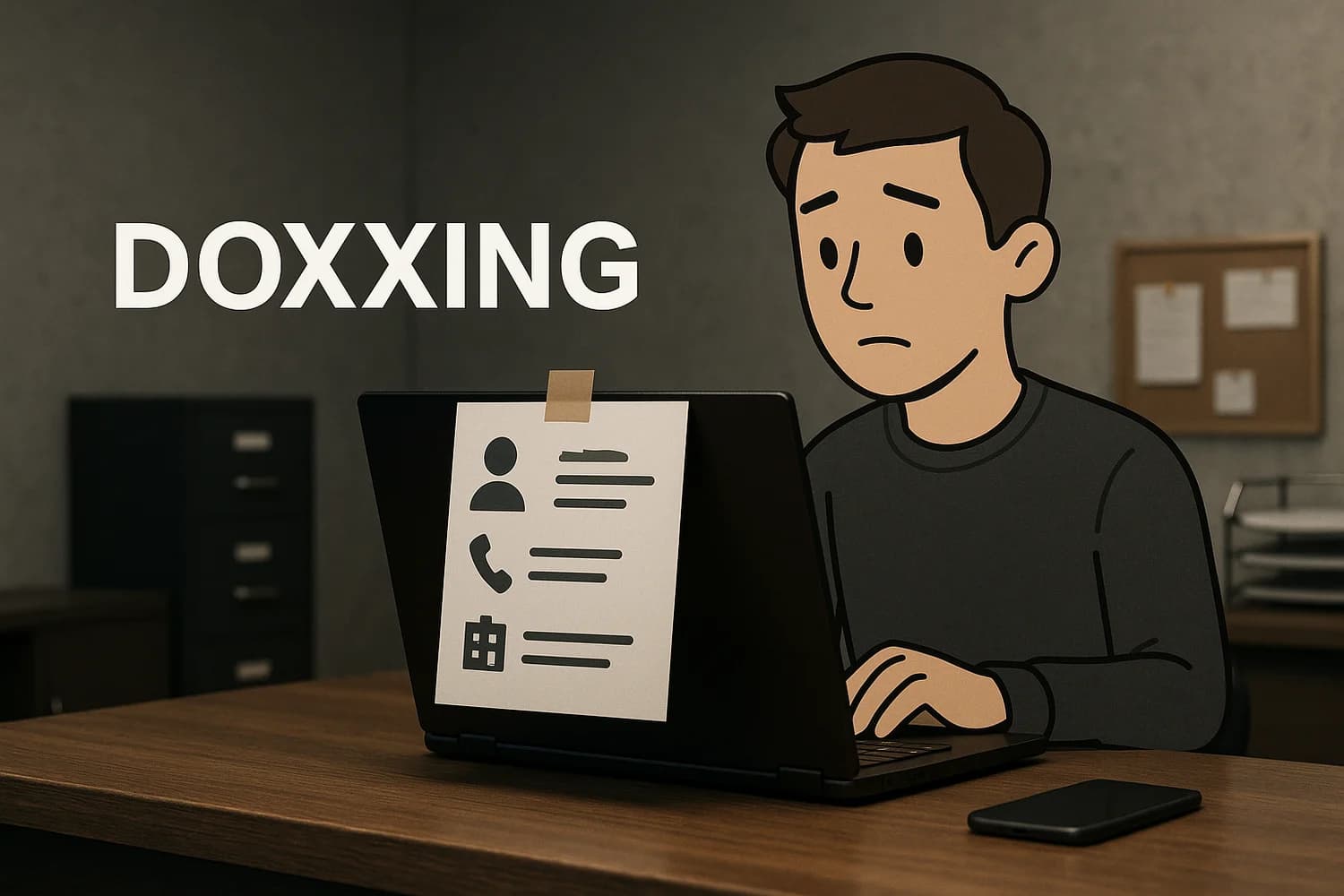
Doxxing is the exposure of private personal information in public, such as your address, phone number, workplace, family details, or identity documents.
It is often used to enable harassment, stalking, fraud, or account recovery attacks that depend on knowing personal details.
Why it matters for account recovery
Once personal details are public, attackers can answer security questions, pressure support teams, target your phone number for SIM swapping, and make phishing or impersonation attempts feel more legitimate. Doxxing increases the attacker’s ability to operate as “you”.
Common failure modes and misconceptions
- Focusing only on content removal: Removal helps, but the more stable win is reducing upstream data sources and hardening account recovery.
- Assuming the risk is only harassment: Public details can be turned into identity fraud and account takeover attempts.
- Underestimating data aggregation: Small exposures across multiple places can be combined into a full profile.
Safe best practices
- Reduce the sources that publish personal data and remove what you can from search results and data brokers.
- Harden the control plane: protect primary email, phone number, and identity accounts used for resets.
- Limit what is visible on social profiles and review privacy settings.
- Preserve evidence of harassment and threats and use official reporting paths when escalation is needed.
Related terms
Related guides
- How to reduce your digital footprint
- How to remove personal information from Google
- How to stop location tracking
- Privacy hardening: reduce account takeover and doxxing risk
The most effective doxxing response is layered: reduce exposure at the sources, then harden account recovery so public facts cannot be used to reset access.