
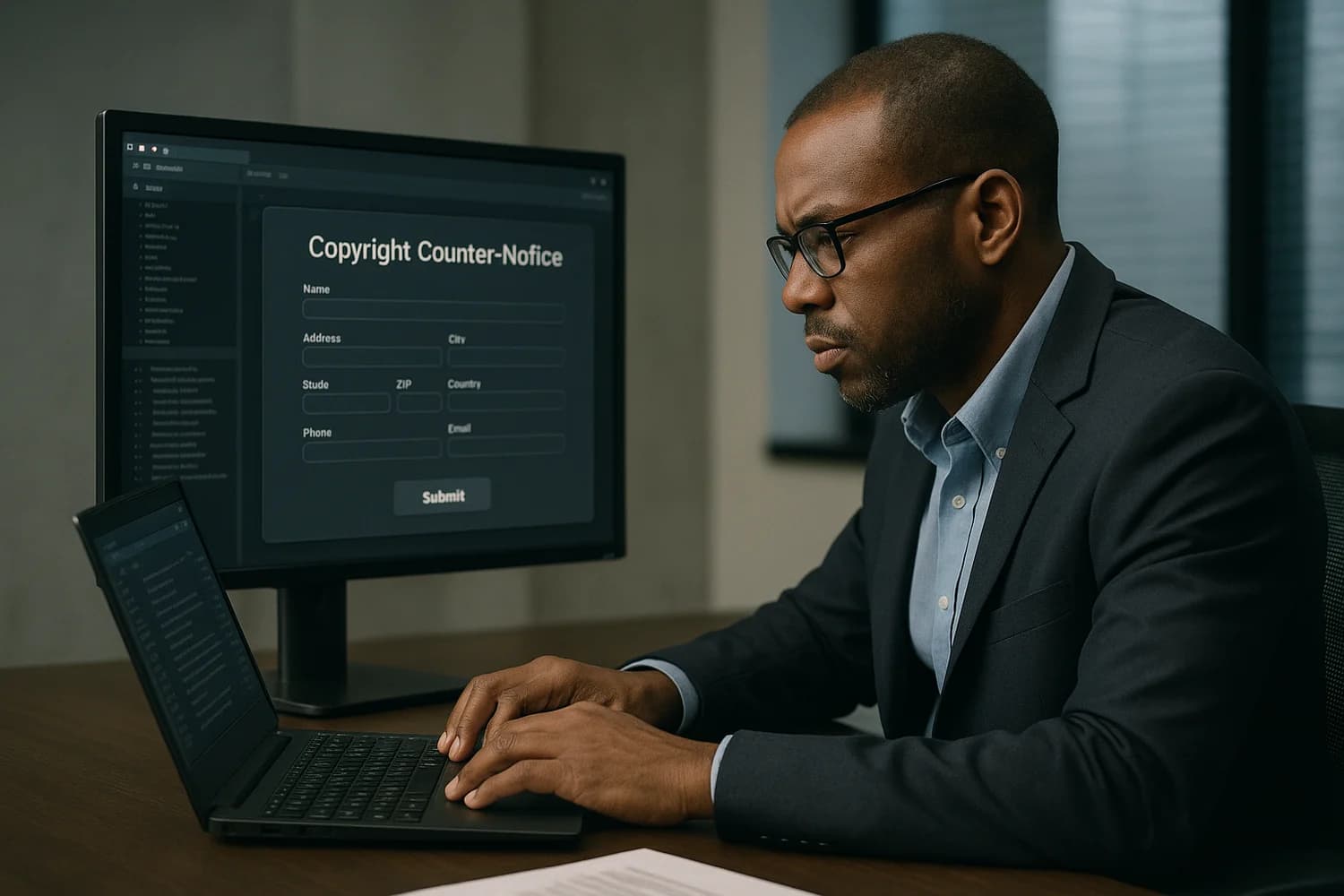
A copyright counter-notice is a formal response submitted after content is removed or disabled due to a copyright claim. It typically states that the removal was mistaken or that the use is authorized, and asks the platform or provider to restore access unless further legal action is taken.
Counter-notices are legal process steps, not routine support tickets. They can change timelines, escalation paths, and legal risk for both sides.
Why counter-notices matter for removal workflows
Many people treat a takedown approval as the end of the process. A counter-notice can reopen the case and force a decision about whether to continue. If the affected content has high risk or high business impact, you need documentation and response discipline before that point.
Rule of thumb: If a counter-notice appears, move from “reporting mode” to “process and evidence mode.”
Common failure modes and misconceptions
- Assuming restoration means the claim was false: restoration can be procedural, not a final merits decision.
- Missing timelines: response windows can be short and platform-dependent.
- Responding emotionally: public arguments often reduce leverage and increase risk.
- Weak documentation: unclear ownership records make follow-up action harder.
Safe best practices
- Keep a clean evidence set: original URLs, infringing URLs, timestamps, and ownership records.
- Track every filing channel (host, platform, search provider) and status separately.
- If stakes are high, get legal advice quickly after a counter-notice is filed.
- Avoid publishing sensitive details while the process is active.
Related terms
Related guides
- How to remove copyright infringement from Google
- How to remove unwanted videos from YouTube
- How to remove personal information from Google
When counter-notices are possible, the strongest position is procedural consistency: clear ownership, exact scope, and documented decisions. That is what makes later escalation defensible.