
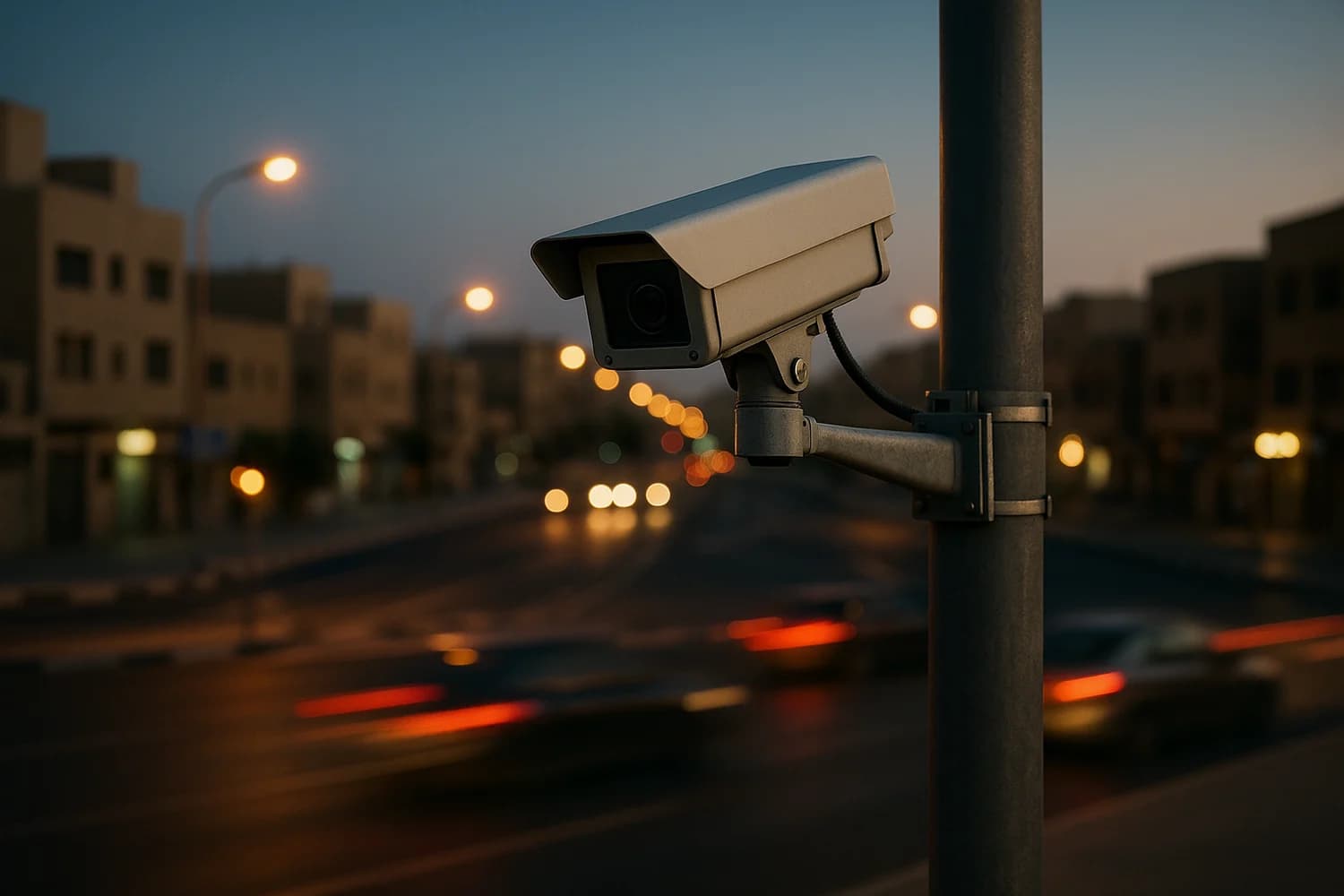
In the 2026 strikes involving Iran, multiple briefings and news reports described cyber and space activity as something closer to a first move than an afterthought. The reported pattern is not a single "cyberattack". It is a set of technical use cases that make targeting easier, shorten reaction time, and shape what civilians and responders can see and share.
Key idea: when conflict escalates, the first systems to be contested are often the systems that tell you what is true: sensors, communications, and the channels people trust.
Start here: immediate steps that reduce harm
- Assume your monitoring can be degraded: keep a fallback telemetry path for critical services and verify alerts across at least two independent sources.
- Lock down the control plane: treat identity, admin consoles, and recovery channels as your real perimeter.
- Harden phones used for work or reporting: reduce sideloading exposure and review permissions for high-trust apps. See sideloading and spyware.
- Prepare for telecom instability: do not rely on SMS for security decisions in high-risk regions. If this affects account access, SIM swapping is the right threat model.
- Build a blackout plan: decide in advance how staff, family, and incident responders will communicate when the internet is degraded or intentionally shut down.
Details in wartime reporting land with different levels of confidence. Some claims are based on on-the-record briefings. Others depend on anonymous sources or group claims. The safest posture is to separate what is confirmed from what is reported, then apply the defensive controls that hold up either way.
What "cyber" meant in the 2026 Iran strike reporting
The most useful framing is to treat "cyber" as four distinct jobs:
- Collection against sensors (city camera systems, device and network data)
- Telecom shaping (tracking, disruption, and coercion channels)
- Comms and sensor degradation to compress response windows
- Influence operations through trusted distribution channels (TV, push notifications, widely used apps)
Evidence tiers for conflict reporting
Conflict reporting blends official statements, anonymous-source reporting, and adversary claims. The practical risk is treating a claim like a confirmed fact. These tiers are a simple way to keep language and decisions aligned to evidence.
| Tier | What it means | How to write it |
|---|---|---|
| A (confirmed) | On-the-record statement or published document from a primary source | "said", "stated", "confirmed" |
| B (well supported) | Multiple reputable outlets plus corroborating detail or analysis | "reported", "according to", cite more than one source when possible |
| C (reported, anonymous sources) | One reputable outlet relying on unnamed officials or intelligence sources | "reported that", plus one sentence on what remains uncertain |
| D (claimed) | Group claim, partisan outlet, or unverified repetition | "claimed" or "alleged", and avoid operational specifics |
Use case 1: Urban sensor exploitation through traffic cameras
Urban camera networks are an intelligence surface. They are widely deployed, unevenly secured, and often managed by a mix of municipal IT, contractors, and vendors with long firmware lifecycles.
Case file (Tier C): A Financial Times report, summarized by TechCrunch, described Israeli intelligence hacking Tehran traffic cameras and penetrating mobile networks to build a "pattern of life" for senior figures ahead of the strike. The underlying access path has not been publicly confirmed.
Defensive takeaways for cities and critical operators are concrete even if attribution is not. Camera fleets should be treated like other critical infrastructure.
- Segment camera networks away from admin networks, citizen services, and anything that can reach identity systems.
- Eliminate shared credentials and enforce per-device authentication with rotation.
- Track firmware and vendor access as a supply-chain risk. If you cannot inventory it, you cannot defend it.
- Log and retain access events in a system that does not live on the same network segment as the cameras.
Use case 2: Telecom shaping for tracking and account risk
Telecom systems sit at the intersection of surveillance and daily life. If a threat actor can access carrier data or influence routing, they can turn phones into beacons, disrupt coordination, and compromise the security assumptions behind SMS-based recovery.
In conflict conditions, the defensive advice is not "turn your phone off". It is to reduce single points of failure.
- Do not use SMS as your strongest control. Prefer app-based or hardware-backed authentication for critical accounts.
- Separate identities: keep a dedicated high-security account for administration and recovery that is not used day to day.
- Plan for number loss: store recovery codes offline and verify which accounts still depend on your phone number for reset paths.
If you are troubleshooting suspicious behavior on a device during a crisis, start with a defensive check rather than improvising: how to check if your phone is hacked.
Use case 3: Degrading communications and sensors to compress response time
This is the clearest example of cyber functioning as operational shaping. The reported intent is not to "steal data". It is to make communication slower, less reliable, and less trusted at the moment it matters most.
Case file (Tier A): Reporting on post-strike briefings quoted the Joint Chiefs chair describing coordinated cyber and space operations that disrupted Iranian communications and sensor networks ahead of aircraft strikes. Specific technical details were not disclosed.
For defenders, the lesson is to treat comms and sensors as a continuity domain:
- Use two independent telemetry paths for critical alerts (for example, a local sensor plus an external monitoring feed).
- Design for degraded mode: if time sync, GPS, or a major communications backbone becomes unreliable, decide what must fail closed and what can fail open.
- Protect the admin plane: if comms are noisy, attackers will often try identity resets and social engineering to gain durable access.
Use case 4: Influence through apps and broadcast channels
Influence operations become more potent when they ride on channels people already trust. Two reported patterns stand out: compromise of high-usage consumer apps and disruption or hijacking of broadcast distribution.
Case file (Tier B/C): Wired reported a widely used Iranian prayer app was hacked to push "surrender" style messages as the strikes began. The reporting indicates a compromise of a trusted channel, but does not fully settle which part of the delivery chain was breached.
A separate earlier episode in January 2026, reported via AP, described hackers disrupting Iranian state TV satellite transmissions to broadcast opposition messaging.
Defensive takeaway: treat unexpected messages as a verification problem, not a persuasion problem. The first goal of many influence operations is to create chaotic action or information leakage.
Use case 5: Connectivity shutdowns and the safety consequences of the fog of war
Blackouts are not only censorship. They also remove safety tooling: maps, banking, ride services, family location sharing, emergency reporting, and the ability to verify rumors quickly. When connectivity collapses, the average person becomes easier to isolate and to mislead.
Wired described the practical constraints on reporting and verification during the 2026 Iran internet blackout period.
Defensive controls that matter here are mostly operational, not technical:
- Pre-arrange check-in protocols with family and staff, including a time window and a fallback channel.
- Keep offline artifacts: printed emergency contacts, offline maps, and hardcopy recovery codes for critical accounts.
- Reduce rumor amplification: if you cannot verify, label uncertainty clearly and avoid forwarding screenshots as "proof".
Attribution is part of the battlefield
In this type of conflict reporting, attribution is rarely a single clean line. States avoid admitting operations. Groups claim operations for narrative advantage. Media outlets rely on anonymous briefings. The result is a public record that mixes strong claims with weak ones.
The practical way to write and to think is to separate:
- What a named official said (Tier A)
- What multiple independent sources converge on (Tier B)
- What a single outlet attributes to unnamed sources (Tier C)
- What actors claim without corroboration (Tier D)
This discipline is not academic. It changes what a defender should do. If a claim is Tier C or Tier D, you can still apply the portable lesson, but you should not build business decisions on the specifics.
Control matrix: threat surface to defensive control
This table is designed to be actionable for cities and organizations that operate where geopolitical escalation can spill into communications and device security.
| Surface | What fails first | Controls that reduce harm | Response owner |
|---|---|---|---|
| Traffic cameras and city IoT | Visibility becomes hostile, not neutral | Segmentation, per-device creds, vendor access control, durable logging | Municipal IT, contractors |
| Mobile networks and SMS | Tracking and account recovery become brittle | Move off SMS where possible, offline recovery codes, high-security admin accounts | Security, IT, identity owners |
| Comms and sensor networks | Response time shrinks and truth becomes expensive | Dual telemetry paths, degraded-mode playbooks, protect admin plane | SOC, SRE, incident commander |
| Consumer apps and push notifications | Trusted channels become coercion channels | App vetting, permission reviews, internal verified comms channel | IT, security awareness |
| Broadcast and satellite distribution | Narrative channel integrity breaks | Authenticated uplinks, distribution integrity monitoring, rehearsed feed-compromise response | Media engineering |
Common failure modes that change outcomes
In hybrid crises, defenses fail less often because of one missing tool and more often because of one missing assumption. These are the failure modes that repeatedly create preventable harm.
- Everything depends on one identity provider, one admin portal, or one recovery inbox. When connectivity degrades, resets become both harder and more dangerous.
- Cameras are treated as facilities gear instead of a networked fleet with a long software supply chain. That gap tends to include shared credentials, weak logging, and vendor access that is not audited.
- Communications plans are built for outages, not for hostile messaging. In a contested environment, the channel itself can become the payload.
- Monitoring assumes honesty: alerts are trusted, timestamps are trusted, and a single source of telemetry is treated as ground truth.
Common mistake: treating a blackout as only a communications problem. It is also an identity and verification problem, because people fall back to weaker reset paths and rumor-driven decisions.
Three practical playbooks for city, enterprise, and individual defense
City operators: camera fleets and public safety systems
- Inventory and segment camera networks, storage, and management consoles. If the management plane can reach other networks, treat it as a privileged system.
- Audit vendor access and require strong authentication, documented access windows, and durable logs exported off-segment.
- Define degraded-mode operations: what is acceptable when video feeds are incomplete or untrusted.
Enterprises with staff or dependencies in the region
- Pre-stage recovery: offline recovery codes, break-glass accounts, and a tested process to rotate credentials quickly under degraded comms.
- Pin the trusted channels your organization will use for urgent direction. Do not improvise in the moment.
- Assume telecom risk: shift critical authentication away from SMS where feasible and protect number-change workflows.
Individuals: travelers, journalists, and families
- Reduce surprise installs: avoid sideloaded apps and treat unexpected prompts as suspicious even if they appear to come from a trusted brand.
- Make account recovery boring: confirm recovery email and MFA are stable before you need them, and keep codes offline.
- Plan the blackout: decide in advance how you will check in, what you will share publicly, and what you will not.
Response planning when comms are contested
In most incidents, you can assume you will have logs, chat, and stable connectivity. In a hybrid crisis, that assumption breaks. The response posture that holds up is simpler:
- Decide what must remain trusted: identity, recovery channels, and the smallest set of telemetry that supports safe decisions.
- Reduce dependencies: fewer admin accounts, fewer external integrations, fewer places where a single reset breaks everything.
- Practice the outage: run a tabletop where the internet is unreliable, SMS cannot be trusted, and your monitoring is partially blind.
In consumer terms, the same logic applies. If your phone number is your master key, you do not have redundancy. If your password manager is not backed up, you do not have recovery. If your recovery email is weak, you do not have a control plane.
For defensive models of social engineering and coercion channels, keep phishing as your baseline mental model. In high-pressure conditions, phishing is rarely about a perfect fake login page. It is about urgency and misdirection.
For organizations, a leaked credential or admin token during an escalation window can become a persistence event. The containment mindset in API key and secrets leak response is relevant even when the incident is not "about" secrets.
Hybrid conflict is where cybersecurity stops being an IT concern and becomes a reliability and governance concern. Sensors, comms, and apps are not neutral utilities. They are the substrate that truth, coordination, and safety depend on. If you treat them as mere tooling, you will discover their importance only after they are contested.
The defensible move is not to predict the next operation. It is to reduce single points of failure, to protect the accounts that can reset everything, and to pre-plan the days when you cannot assume connectivity, verification, or calm decision-making.
That posture does not make you invisible. It makes you functional, which is what matters when the environment is designed to make everyone less functional.